Introduction
In a world the place technology evolves at a breakneck speed, the healthcare area has been compelled to conform shortly. With the upward thrust of digital wellness information (EHRs), telemedicine, and a variety of virtual methods that streamline sufferer care, the possible for details breaches has surged. Protecting sensitive sufferer information is not just a regulatory requirement; it’s a moral legal responsibility that healthcare firms have to take heavily. This article delves into Securing Patient Data: The Critical Importance of IT Support in Healthcare Cybersecurity, exploring how tough IT beef up lays the muse for positive cybersecurity measures inside of healthcare settings.
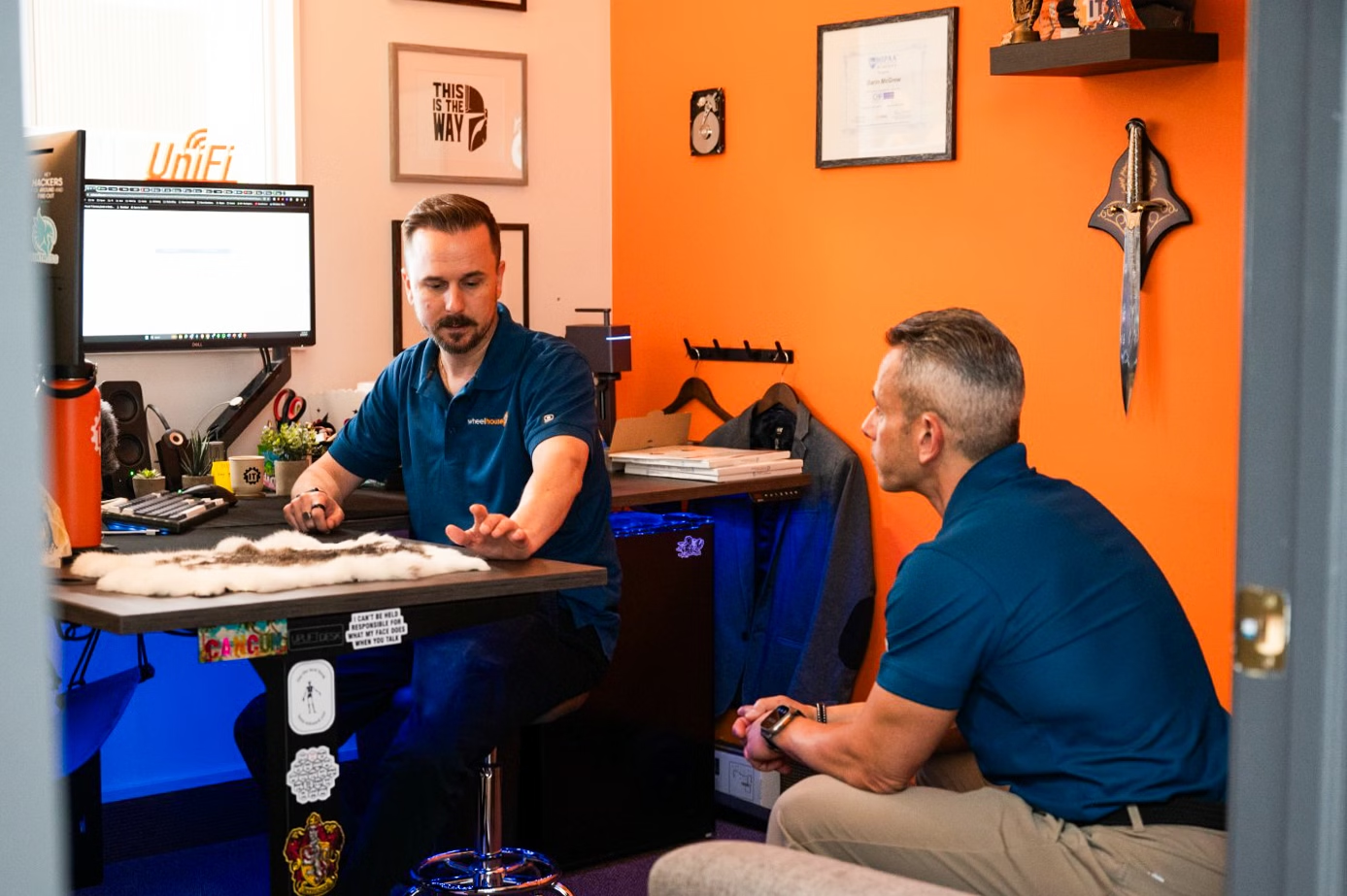
Securing Patient Data: The Critical Importance of IT Support in Healthcare Cybersecurity
Understanding Healthcare Cybersecurity
Healthcare cybersecurity comes to overlaying scientific knowledge from unauthorized get right of entry to or cyber-assaults. Given the sensitivity of affected person records, which include Social Security numbers, scientific historical past, and billing main points, safeguarding this info is paramount. Cybersecurity threats can range from phishing attacks to ransomware and might have devastating outcomes for healthcare suppliers and patients alike.
Why is IT Support Essential?
IT assist performs a pivotal position in organising sturdy cybersecurity frameworks. It encompasses various amenities that ascertain methods are not in simple terms useful yet also comfy in opposition to strength threats. Here are several factors why IT toughen is mandatory in healthcare:
Constant Monitoring: Continuous surveillance of networks enables stumble on intrusions earlier than they expand. Software Updates: Regular updates patch vulnerabilities that cybercriminals may just take advantage of. Data Backup: Ensures that vital affected person guide might possibly be restored in case of an assault. Staff Training: Educating body of workers approximately cybersecurity satisfactory practices seriously reduces human errors.The Growing Threat Landscape
The frequency and sophistication of cyber-assaults on healthcare establishments have extended dramatically in fresh years. According to a document by means of IBM, healthcare facts breaches charge establishments a typical of $four million in keeping with incident. This superb parent emphasizes the need for strong IT beef up procedures to mitigate dangers effectually.
Common Types of Cyber Threats in Healthcare
- Phishing Attacks: Often disguised as respectable communications, these assaults trick employees into divulging sensitive understanding. Ransomware: Malicious application that encrypts archives except a ransom is paid; hospitals have been centred with devastating outcome. Insider Threats: Employees may perhaps inadvertently or intentionally compromise safeguard protocols.
Building an Effective IT Support Structure
Identifying Key Components of IT Support
To be certain accomplished cybersecurity in healthcare, enterprises would have to recognition on numerous key elements:
1. Network Security Solutions
Implementing firewalls and intrusion detection structures (IDS) creates barriers to unauthorized get entry to even though tracking visitors for suspicious process.
2. Endpoint Security
Devices used by healthcare team ought to have ample coverage simply by antivirus application and average scans to forestall malware infections.
3. Compliance Management
Ensuring adherence to rules akin to HIPAA (Health Insurance Portability and Accountability Act) requires committed components and advantage.
4. Incident Response Planning
Having a properly-suggestion-out plan to cope with knowledge info breaches can curb damage whilst incidents take place.
The Role of Staff Training in Cybersecurity
Creating a Culture of Security Awareness
Human error stays one of several foremost factors of records breaches in healthcare settings. Therefore, making an investment in team instructions should not be left out:
- Conduct traditional instruction periods that cowl familiar cyber threats. Use true-world examples to demonstrate the influence of terrible cybersecurity practices. Encourage a culture in which workers experience secure reporting suspicious hobbies with no concern of reprisal.
Effective Training Methods
Interactive Workshops: Engaging classes inspire participation and retention. E-Learning Modules: Flexible online guides permit group of workers to analyze at their very own velocity. Phishing Simulations: Testing people with simulated phishing makes an attempt allows gauge their readiness.Data Encryption: A Vital Component
What is Data Encryption?
Data encryption transforms readable data into an unreadable structure by using algorithms, making sure that whether or not documents falls into the wrong palms, it remains blanketed.
Importance in Healthcare Settings
Protects delicate patient archives throughout the time of transmission among instruments or networks. Ensures compliance with criminal requirements concerning patient confidentiality. Builds belif with sufferers who are expecting their facts to be treated securely.Incident Response Plans: Preparing for the Worst
Developing an Incident Response Strategy
A well-described incident response plan prepares organizations to behave abruptly when a breach takes place:
Identify roles and duties throughout the response staff. Establish clear communication channels both internally and externally. Conduct steady drills to check the effectiveness of the response plan.Post-Incident Analysis
After any incident happens, carrying out a thorough evaluation enables pick out weaknesses:
- What went wrong? How could it had been averted? What steps will likely be taken shifting forward?
Regulatory Compliance: Navigating Legal Requirements
Understanding HIPAA Regulations
The Health Insurance Portability and Accountability Act services of long island mandates stringent measures for protecting sufferer files:
Administrative safeguards contain regulations governing employee behavior referring to data get admission to. Physical safeguards defend amenities housing delicate know-how with the aid of controlled get admission to elements. Technical safeguards involve encryption protocols and protected transmission tactics for electronic data.Consequences of Non-compliance
Failure to conform with HIPAA can cause hefty fines ranging from $100 to $50,000 in keeping with violation depending on severity—making compliance no longer simply moneymaking but mandatory.
Third-birthday party Vendors: Managing Risks Effectively
Why Third-birthday party Vendor Risk Matters?
Healthcare companies most commonly place confidence in quite a number third-celebration companies for capabilities like billing or leadership utility; nevertheless, those partnerships introduce added hazard motives:
Vendors might lack ample safety features greatest to vulnerabilities within your strategies. Sharing affected person files with 1/3 parties increases publicity if these companies event breaches themselves.Managing Third-get together Risks Through Due Diligence
Conduct thorough assessments beforehand partnering with any dealer:
- Review their protection guidelines and practices Ensure they agree to principal regulations Monitor their efficiency routinely after onboarding
Emerging Technologies in Healthcare Cybersecurity
Artificial Intelligence (AI) Applications
AI applied sciences supply promising developments in detecting anomalies indicative of potential threats turbo than natural tactics might ever reap:
AI algorithms examine community styles to name unexpected habit suggesting a possibility breaches. Machine discovering regularly improves detection abilties depending on previous incidents—ensuing in smarter defenses over time.
Blockchain Technology's Role
This decentralized ledger approach ensures transparency even as securing sensitive transactions same promptly or ultimately to sufferer care by using cryptography enhancing typical integrity throughout varied stakeholders in touch in the course of therapy tactics guaranteeing no single entity controls it utterly!
FAQs About Securing Patient Data
Q1: Why is maintaining sufferer facts so an important?

Q2: How occasionally must we update our cybersecurity measures?
Regularly updating your cybersecurity measures each few months—or in an instant after any central alterations—is a good suggestion.
Q3: What could we do if we suspect a breach?
Immediately notify your IT department or detailed incident response crew; persist with your incident reaction plan protocol.

Q4: Can preparation shrink human errors involving cyber threats?
Yes! Regular exercise severely reduces human blunders by using teaching crew about spotting threats like phishing attacks.
Q5: How do we favor stable 0.33-get together owners?
Evaluate carriers’ protection guidelines, ask about compliance certifications (like ISO), evaluate prior incidents involving them.
Q6: Is encryption mandatory lower than HIPAA?
While now not explicitly mandated less than HIPAA rules, encryption is strongly recommended as an effective defense.
Conclusion
In conclusion, Securing Patient Data: The Critical Importance of IT Support in Healthcare Cybersecurity cannot be overstated amid modern day troublesome hazard panorama going through medical associations globally as of late! Investing time & materials into effective infrastructures complemented by using ongoing schooling ensures each compliance with laws & peace-of-brain understanding sufferers' crucial guide remains riskless from injury’s attain permitting them keep receiving fine care without irritating approximately privateness violations happening omitted in the back of-the-scenes! Let's prioritize strengthening our defenses jointly—in any case; there is nothing more constructive than have faith among caregivers & those in search of support all through inclined moments desiring guarantee the whole lot stays exclusive for the time of healing approaches!